"With this hand, I can shake hands with the world again" | National Limb Disability Awareness Day
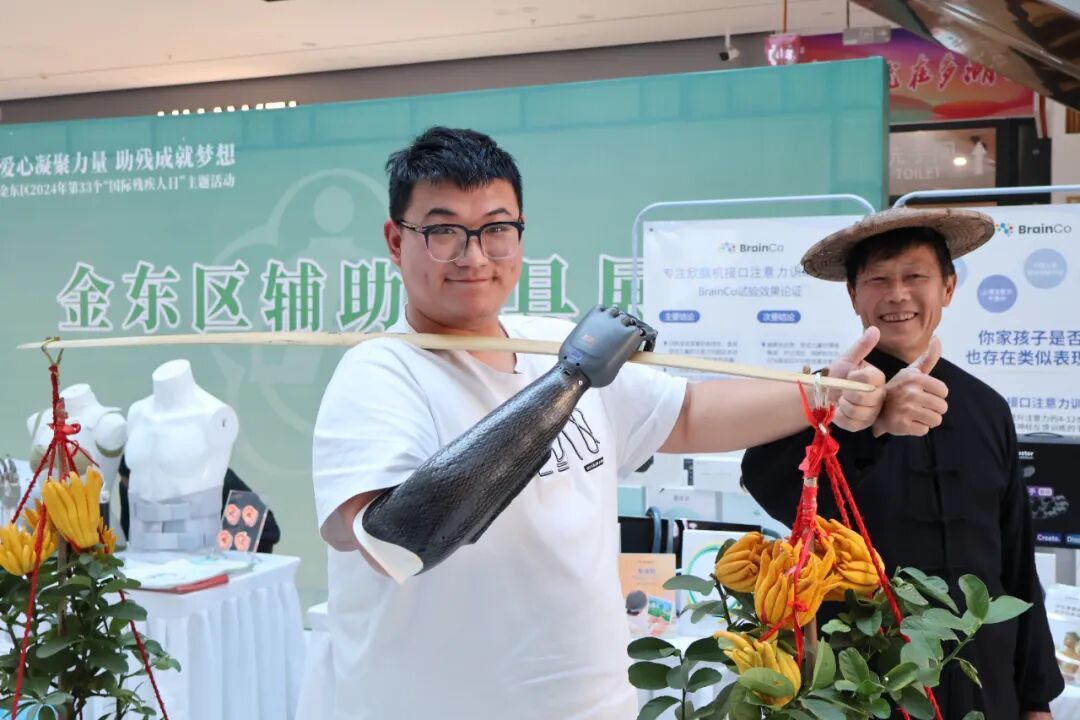
In 2010, the China Disabled Persons’ Federation designated August 11 as the “National Limb Disability Awareness Day,” symbolizing the two wheels of a wheelchair and two crutches used by people with limb disabilities. On this day, public welfare activities, policy advocacy campaigns, and accessibility experiences are organized across society to raise awareness of the rights and needs of people with physical disabilities and to promote a more inclusive society.
According to statistics, there are more than 24 million people with physical disabilities in China. Due to congenital conditions, accidents, chronic illnesses, and other causes, many face mobility impairments and challenges in transportation, employment, social interaction, and daily life.
Yet regardless of the difficulties they encounter, many people with limb disabilities continue to write their own life stories with optimism and determination. Today, we would like to introduce a young man who lost his right hand in an accident, but has regained the ability to “shake hands” with the world through a domestically developed intelligent bionic hand.
Coffee beans crackled softly inside the grinder. Xiao Jiang steadily held the handle with his right hand while supporting the cup with his left, moving with the ease and confidence of a professional barista.
The bionic hand gleamed with a metallic sheen, its precision joints rotating flexibly with every movement he made. Passersby would often stop and stare for a moment, but Jiang Songning had long grown accustomed to the attention.
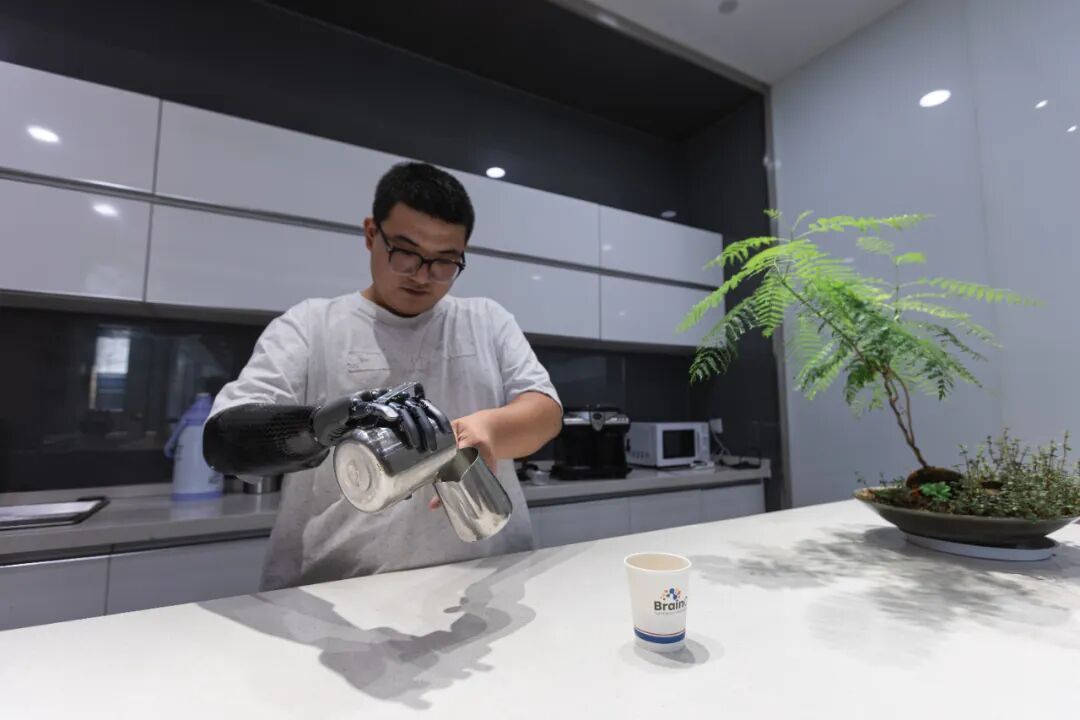
“I really enjoy making coffee for people now,” he said while adjusting the grind size. “After my amputation, I could never have imagined that I would still be able to make coffee. But now, I can even create latte art.”
At the age of 17, he was still a high school student. In order to help ease his family’s financial burden, he worked at a factory run by his relatives. During a machine operation accident, his right hand was severely injured and ultimately amputated. What should have been a period of preparing for the college entrance examination like any other teenager instead became a complete turning point in his life.
The months following the amputation were the hardest. He stayed at home all day, struggling even with simple daily tasks. He needed help eating, had difficulty opening doors, and household chores felt nearly impossible. His family never said much, but he could sense their worry and helplessness.
In the months following his amputation, several prosthetic fitting institutions in Shandong recommended different prosthetic options to him. After careful consideration, however, he did not choose any of them.
A turning point came unexpectedly. During a business trip to Chengdu, his uncle came across an intelligent bionic hand at an exhibition. Excited, he returned home and told him, “There’s a domestically developed prosthetic that looks really impressive—why don’t you give it a try?”
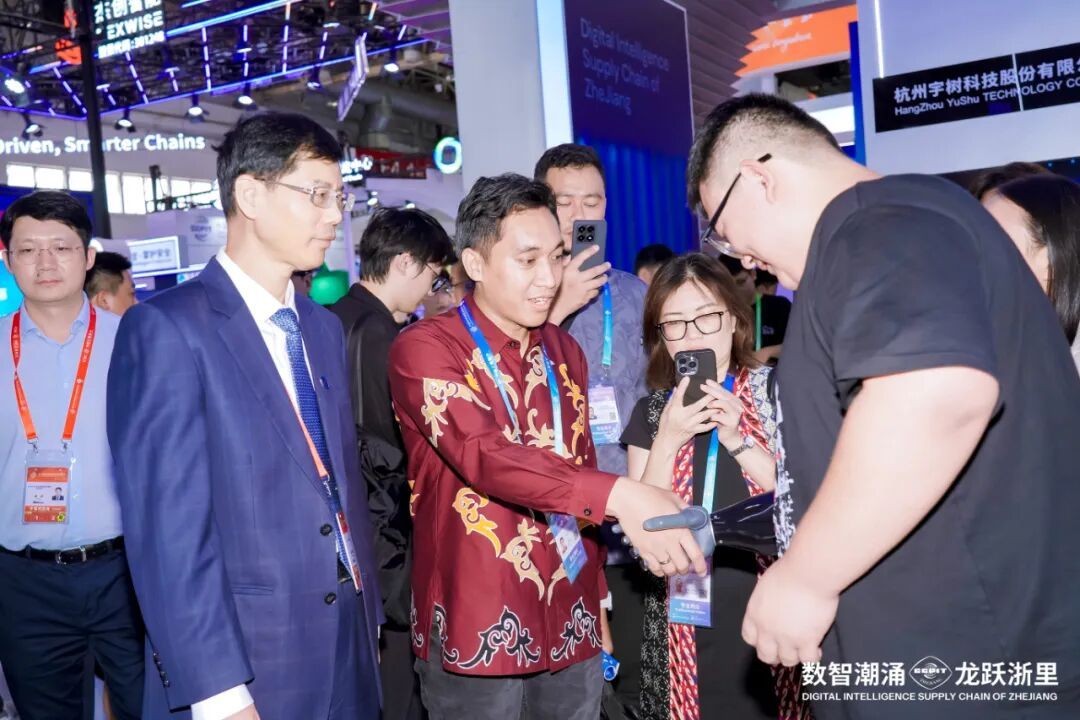
He still remembers very clearly the moment he first wore the prosthetic hand. After the staff installed and calibrated the device, something almost miraculous happened—whenever he intended to make a movement, the hand would respond. His fingers slowly curled and extended, performing the actions he had just imagined in his mind. At that moment, he widened his eyes like a child witnessing a magic trick for the first time.
The sense of awe continued after he returned home. His family gathered around him, watching the hand effortlessly grasp objects, all finding it almost unbelievable. News of it quickly spread, and relatives and friends came over out of curiosity, asking questions and examining it closely.
What amused him the most was the reaction of the children. They would stare with wide eyes and excitedly call him “Iron Man” or “Thanos,” even seriously asking whether he could snap his fingers. Every time he heard such questions, he couldn’t help but laugh.
Just a month after getting the prosthetic, he wanted to challenge himself—riding an electric scooter home. To increase grip, he wrapped a few layers of cloth around the bionic hand, then carefully got on the scooter. The five-kilometer ride went smoothly, and the feeling of regaining control over his life filled him with excitement.
Later, he used the hand to ride a tricycle, husk corn, and do farm work. Wearing this prosthetic, he felt almost like anyone else—his right hand had truly “come back.” He even packed a backpack and climbed Mount Tai, handling objects and holding handrails along the way with ease.
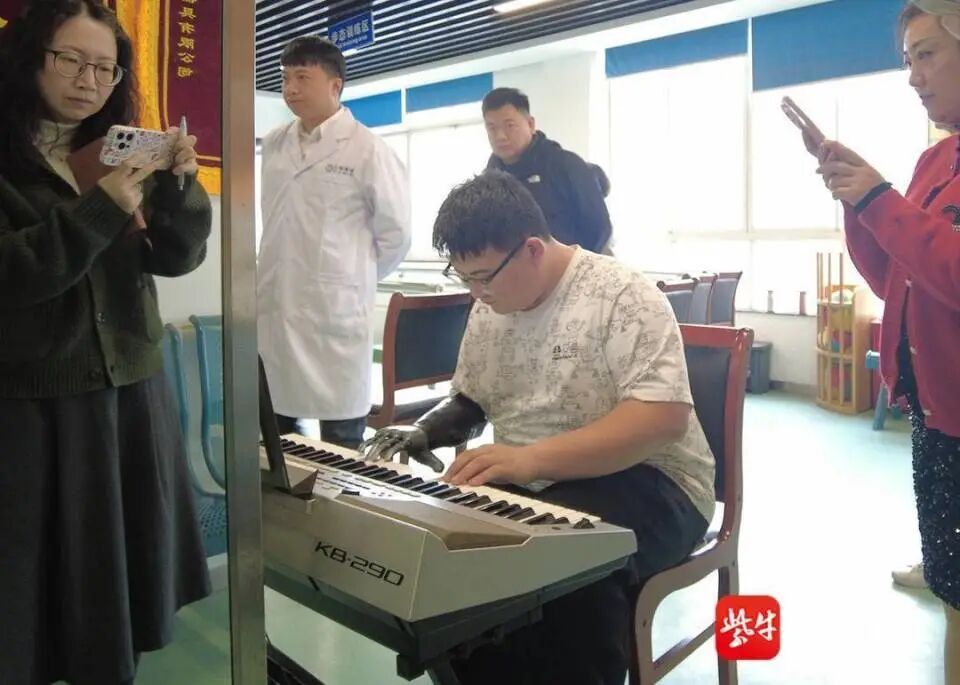
The bionic hand allowed him to rediscover the possibilities of life. He could pick up small items such as tissues or business cards, and even handle heavier objects. More importantly, he began trying things he never dared to imagine before—like practicing piano, where every touch of the keys with his fingers brought a sense of novelty.
To push himself further, he enrolled in a coffee training class specifically for people with disabilities. From extraction to milk frothing and latte art, every step required precise hand control. At first, his movements were a bit awkward, but over time he discovered that the bionic hand performed remarkably well in these fine operations. Today, he can skillfully make all kinds of coffee, even serving his colleagues at work.
During his university years, he maintained close contact with the BrainCo team, participating in multiple new feature tests and product demonstrations. His greatest wish now is to play a meaningful role in the future development and iteration of domestically produced intelligent prosthetics—not just as a user, but as an active participant. He hopes that through his personal experience, prosthetics can continuously improve in precision, comfort, and sensory capabilities, allowing more people like him to access smarter, better-suited prosthetic hands.
With this hand, he has regained the rhythm of life and the courage to interact with the world. Whether meticulously brewing coffee, flowing melodies across piano keys, or confidently demonstrating on an exhibition stage under the gaze of others, he is ready to lift this hand—to touch, create, and grasp the future that belongs to him.